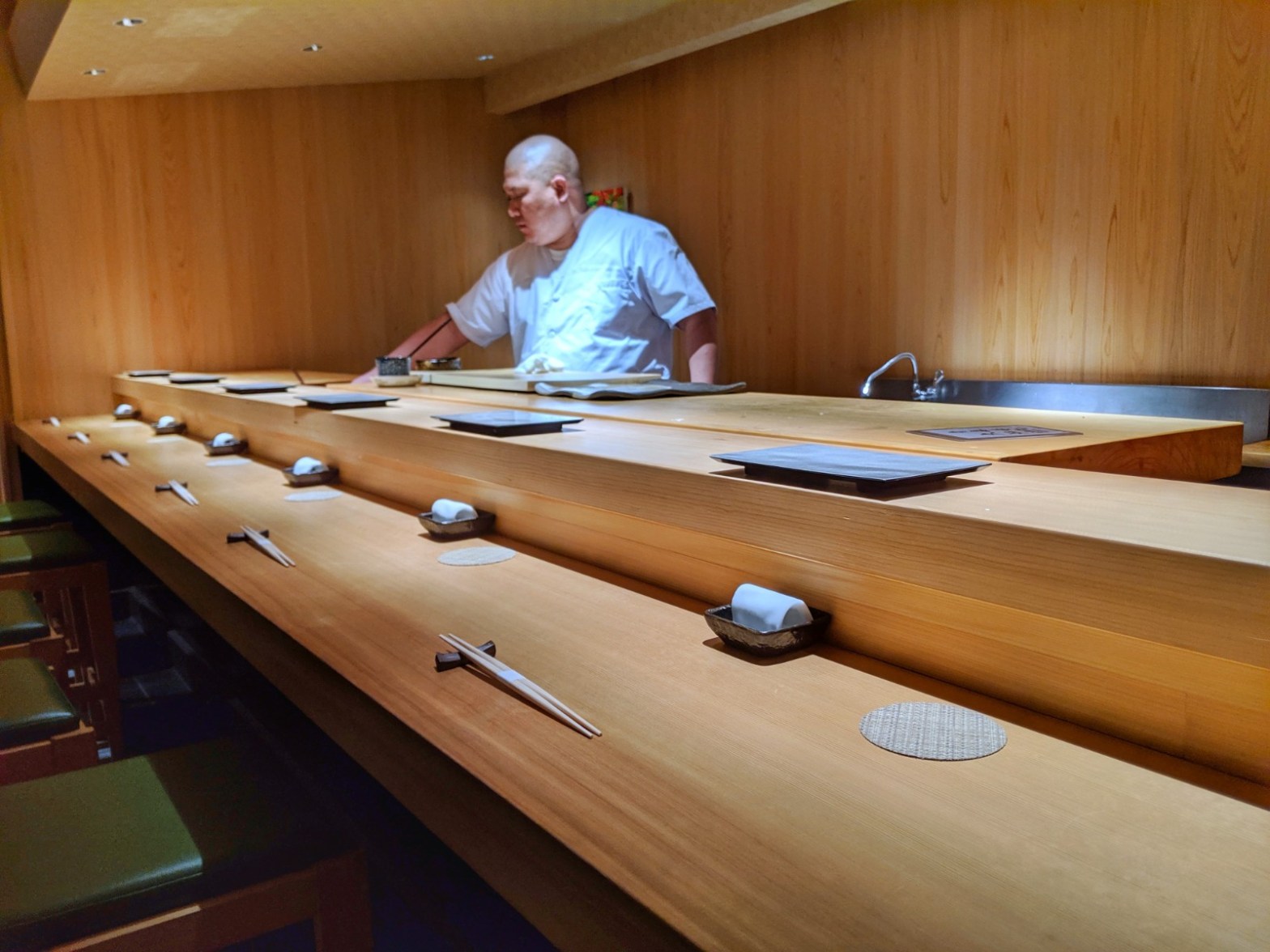
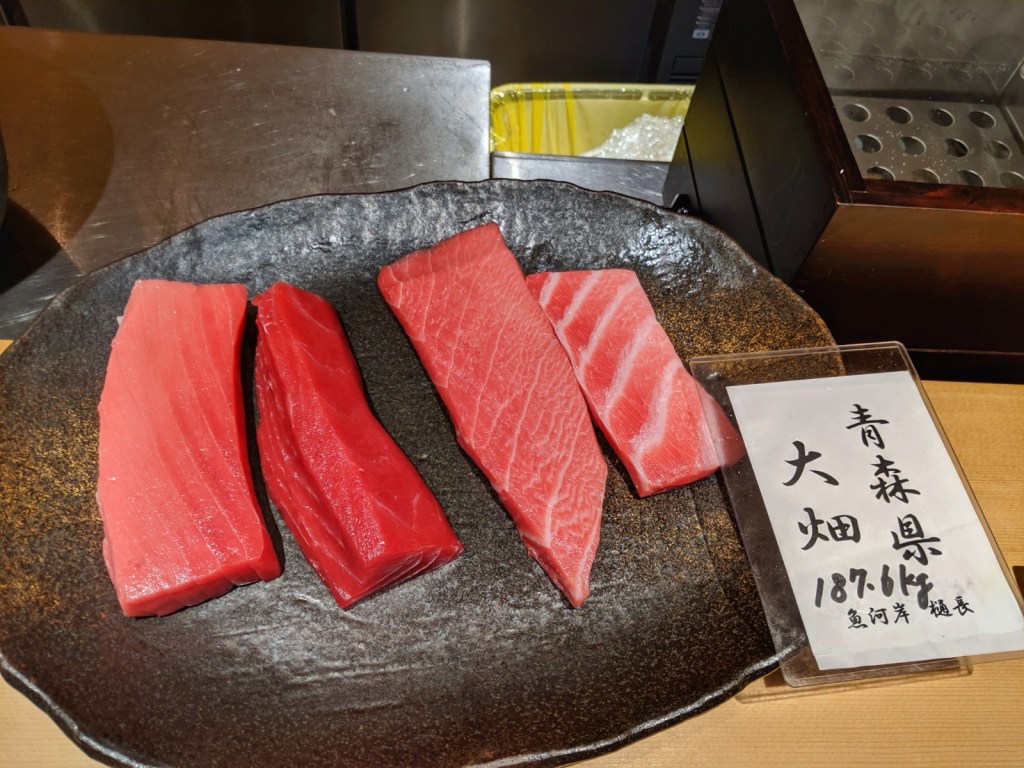
Inomata is pretty well known in the community as an under the radar (sort of) place where you can find excellent sushi on the outskirts of Tokyo. It takes approximately 50-60 minutes to get to the area from Shinjuku Station.
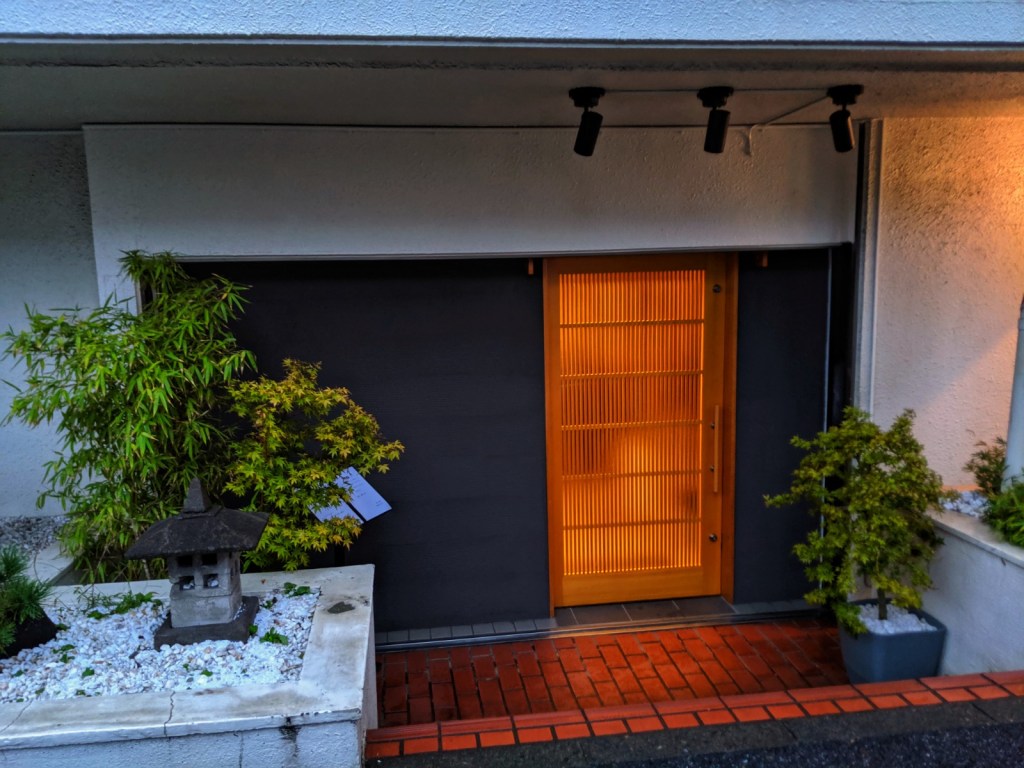
My friend secured this booking for us on a Friday evening about one month prior via Omakase-Japan. There are plenty of different websites you can use for bookings like TableAll, PocketConcierge, and Jpneazy as well. But I believe currently, Inomata can only be booked by foreigners via Omakase-Japan. For any avid sushi eater from abroad with no local hookups in Japan, it’s going to be important for you to utilize these online concierge services. Alternatively, stay at a nicer hotel and make sure they have a concierge service and you’ll be able to secure some bookings.
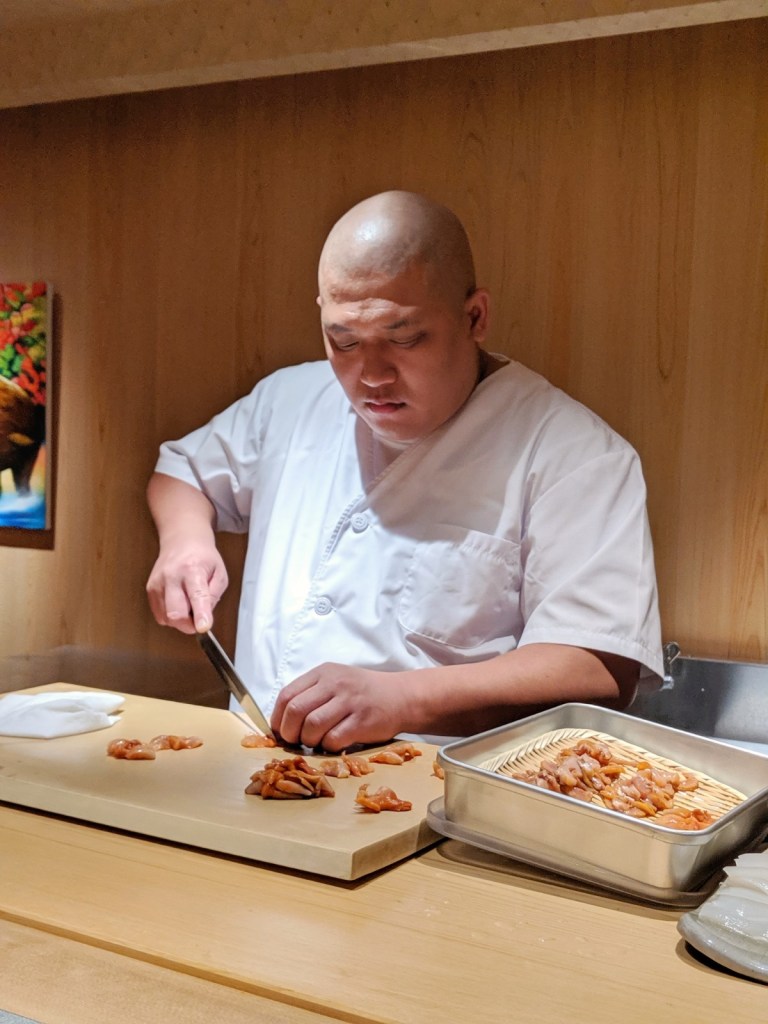
I’ve seen Inomata-san described as a pretty quiet guy who mostly just focuses on making his sushi. But he definitely went out of his way to try to speak with me and my friend even though he basically spoke no English. We both made liberal use of our respective translation devices to try and keep a conversation. It was really nice of him to try and talk with us, made us feel more like we belonged.
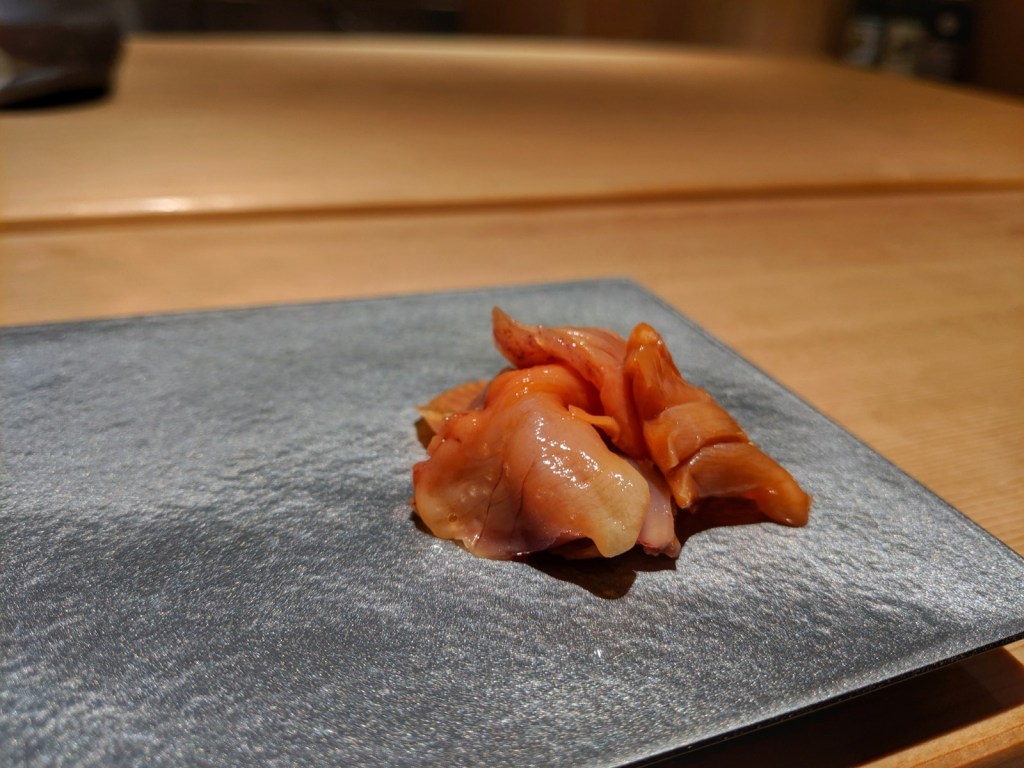
Some fancy omakase places offer multiple tsumami (appetizer) courses prior to sushi. In this sitting, Inomata-san started off the meal with crunchy and sweet ark shell sashimi. This goes great with sake (don’t forget to order sake here!)
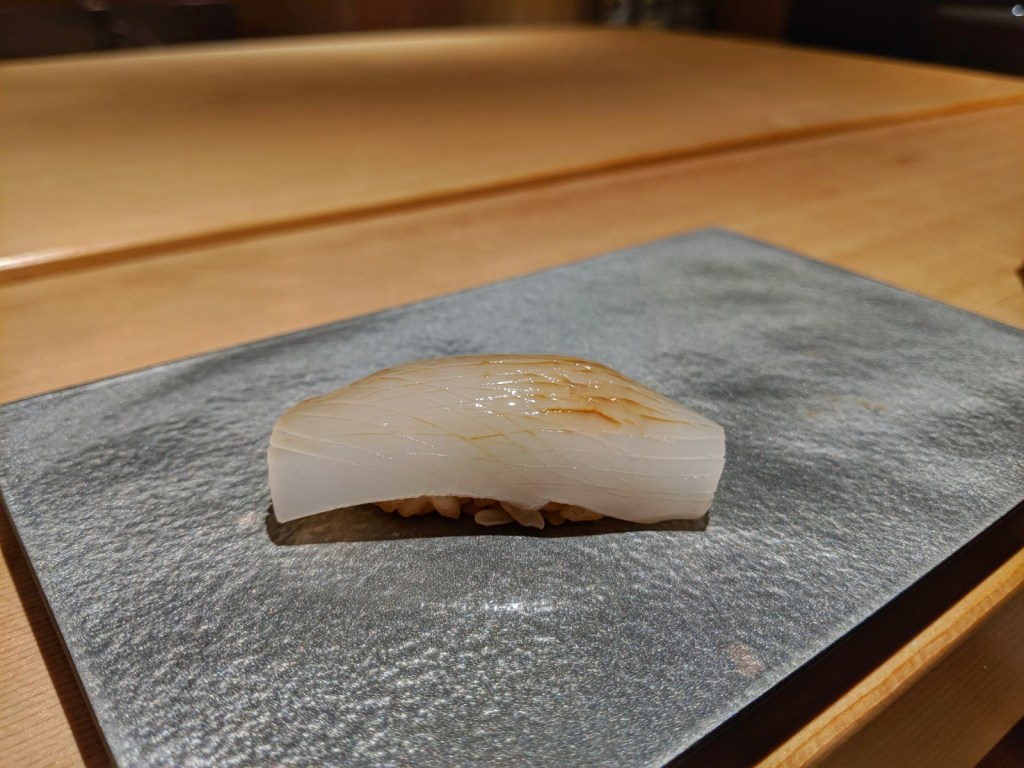
The squid had this crunchy yet slick quality to the meat, and as you bit into it more and more a pleasant sweetness gently encompasses your mouth.
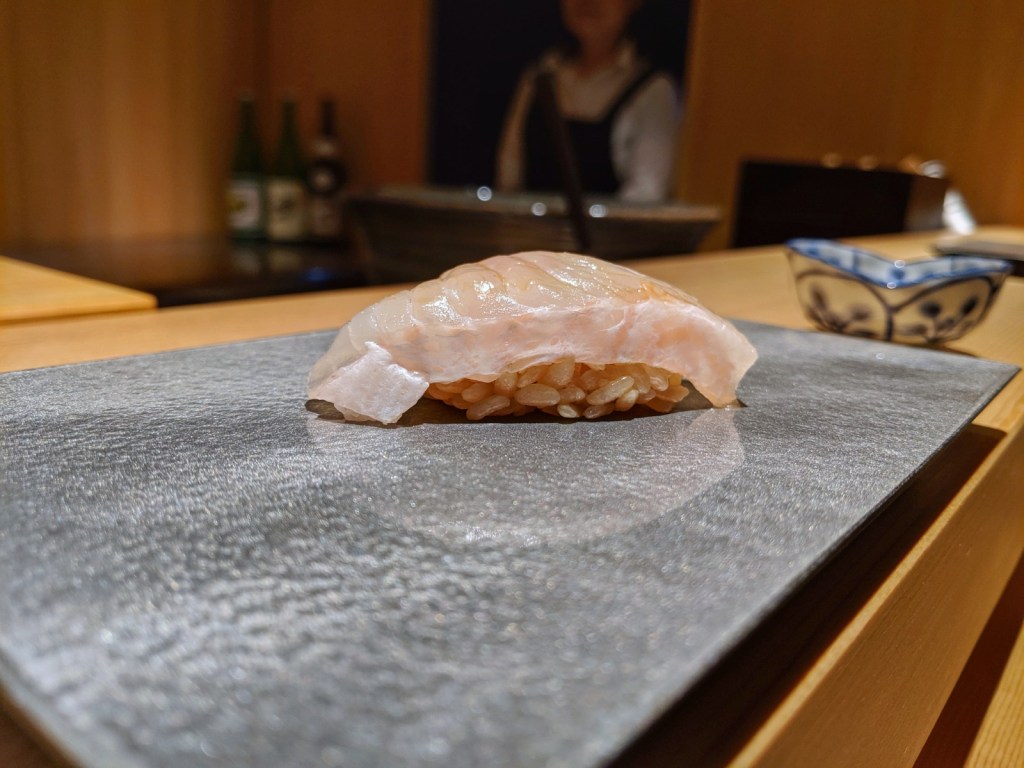
There’s a very gentle umami that ends with a note of mushroom in this flounder, along with fattiness that I generally don’t experience in hirame.
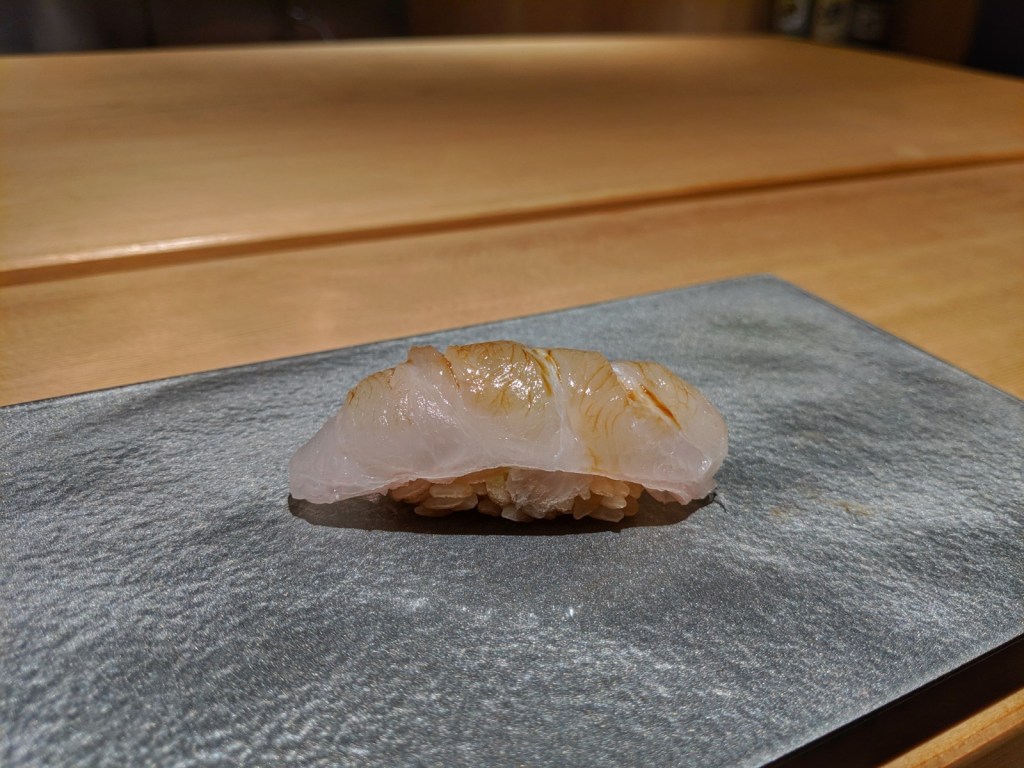
Kind of like the next dimension of the fattiness I noted in the previous piece, since Kue (a type of grouper) is still a white fish, despite the fattiness of the meat it still retains a lighter mouthfeel.
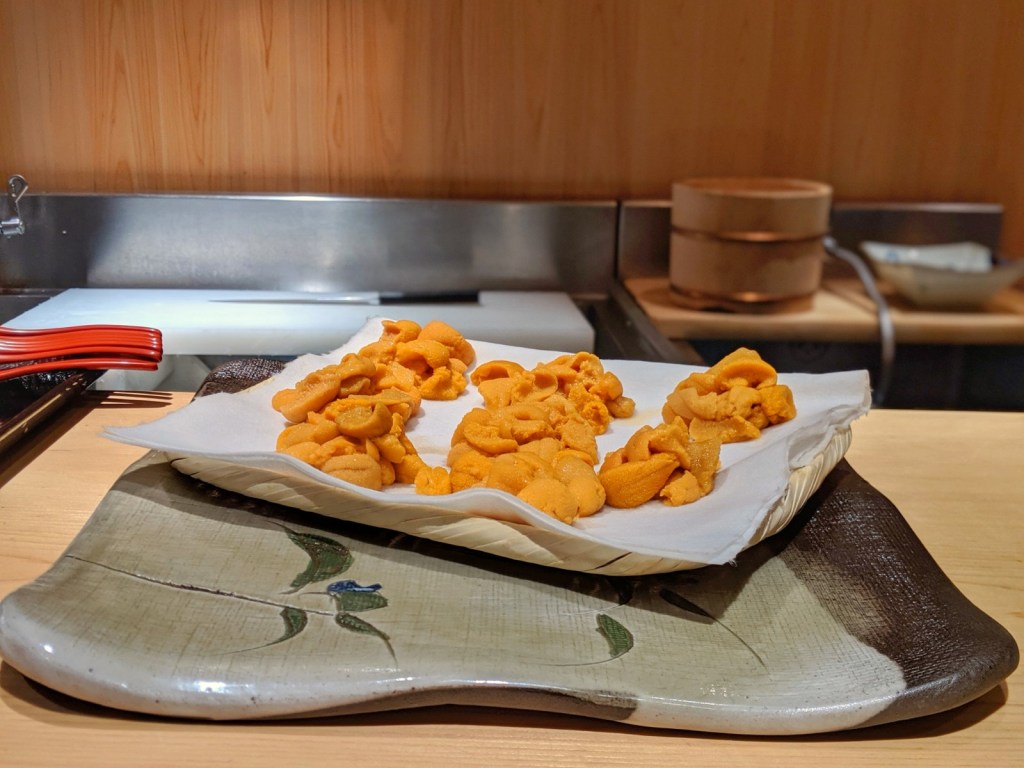
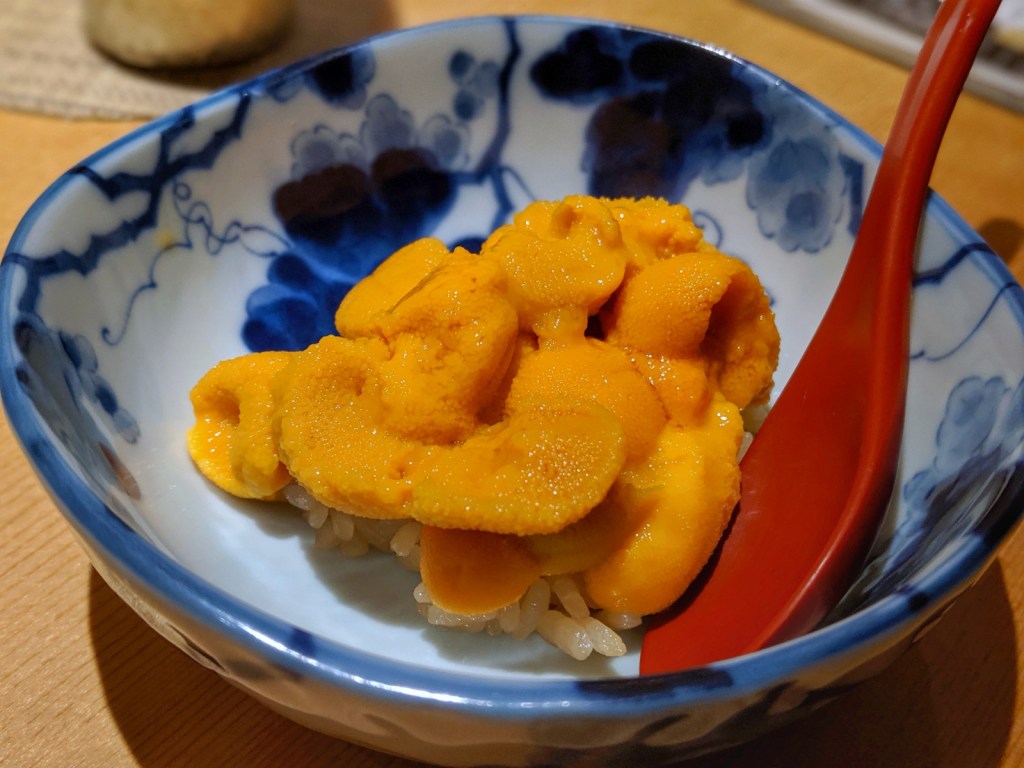
The kobujime on the uni intensified the flavour of it several fold. There was zero bitterness or otherwise unpleasant aftertaste, instead just echoes of that wonderful umami from the kelp-marinated sea urchin.
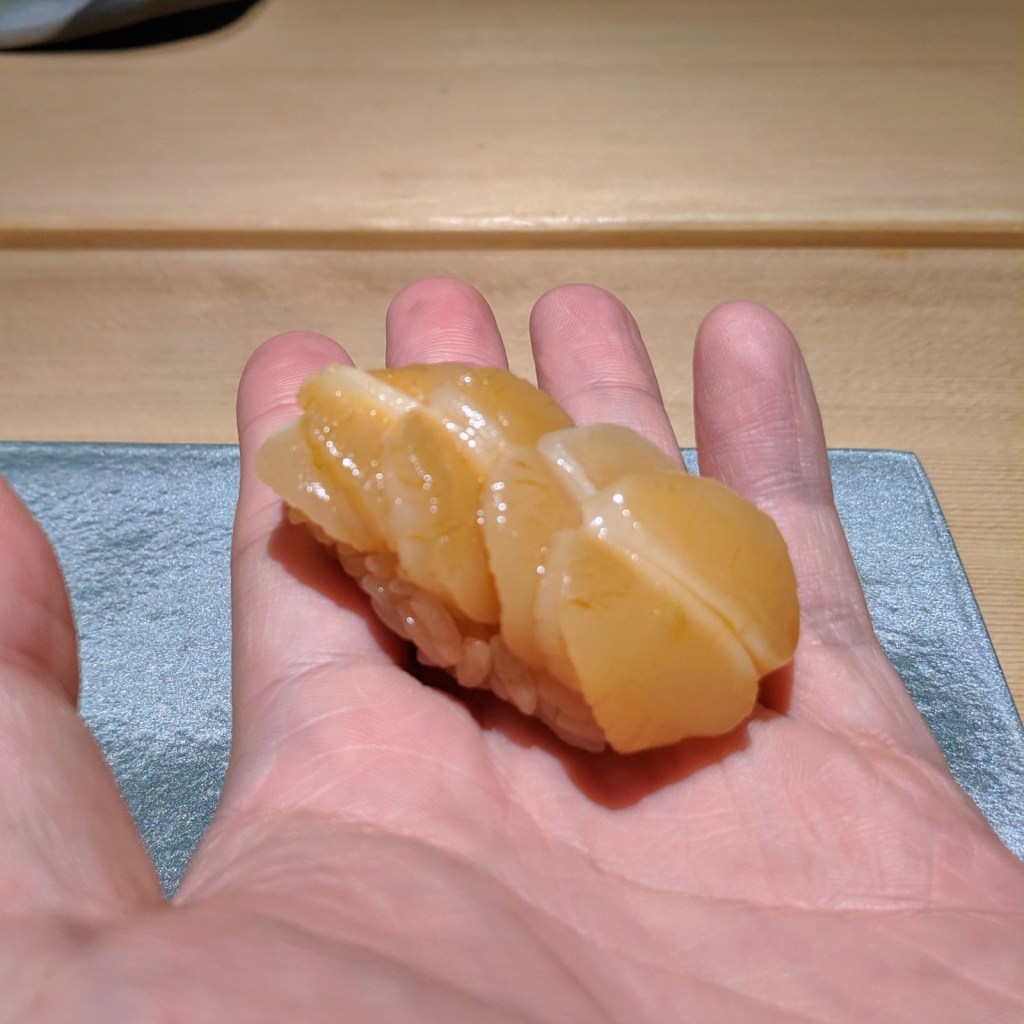
This is the muscle on surf clams. The sweet flavour is reminiscent of scallop but with a far more accentuated and complex texture.
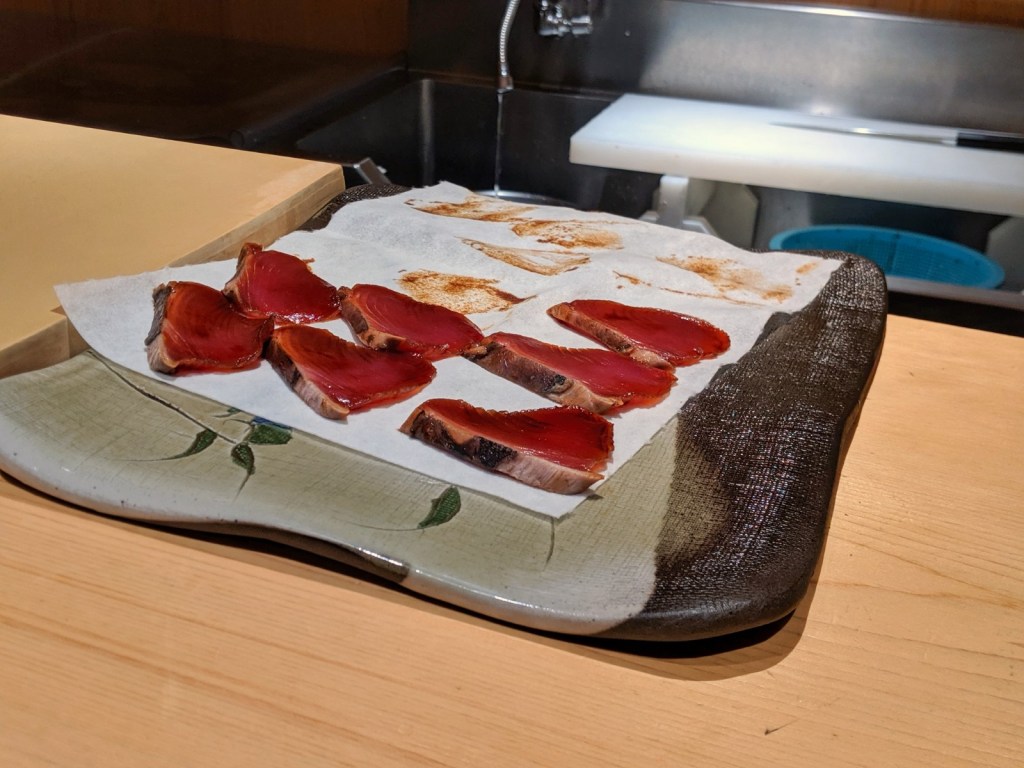
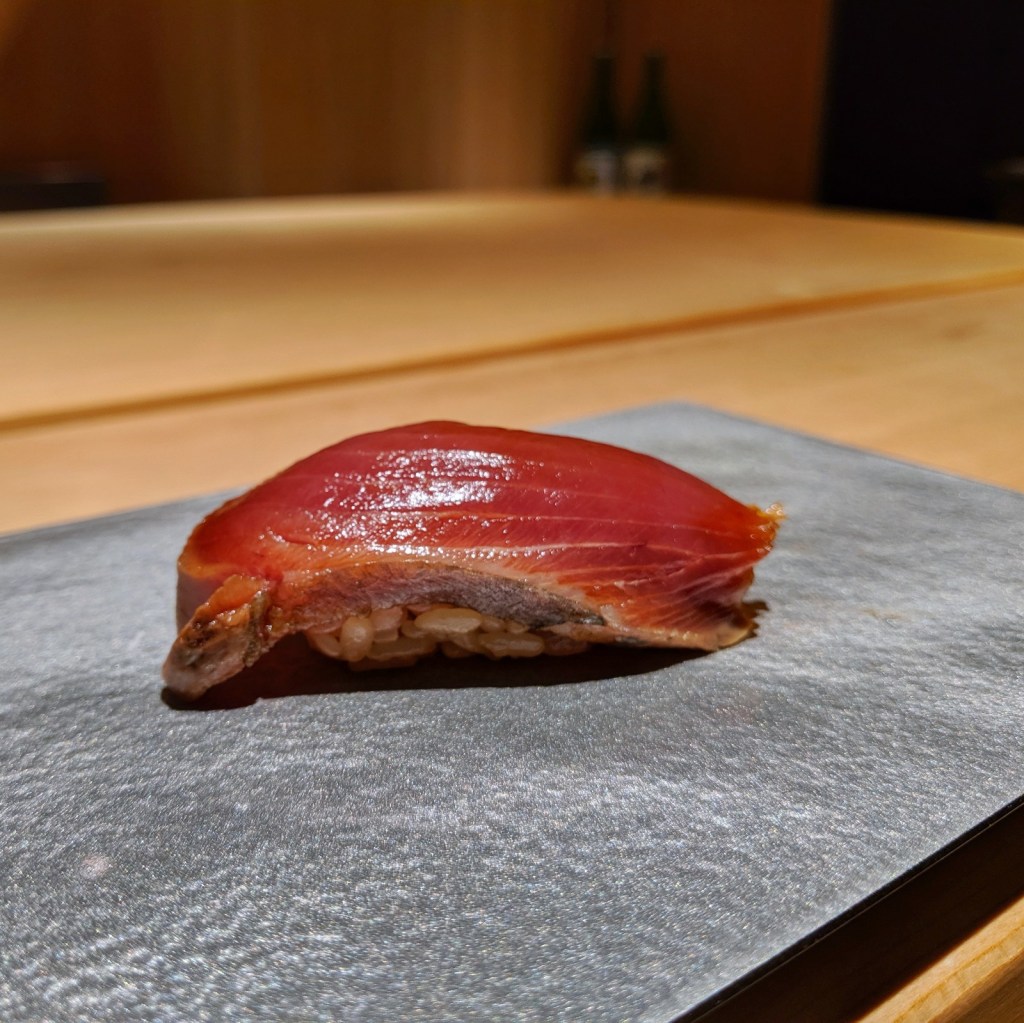
Green onion is laid beneath the fish, helping to balance out the oiliness of the piece. This robust oiliness is what differentiates it from the fatty texture you’d normally get with o-toro or jabara-toro.
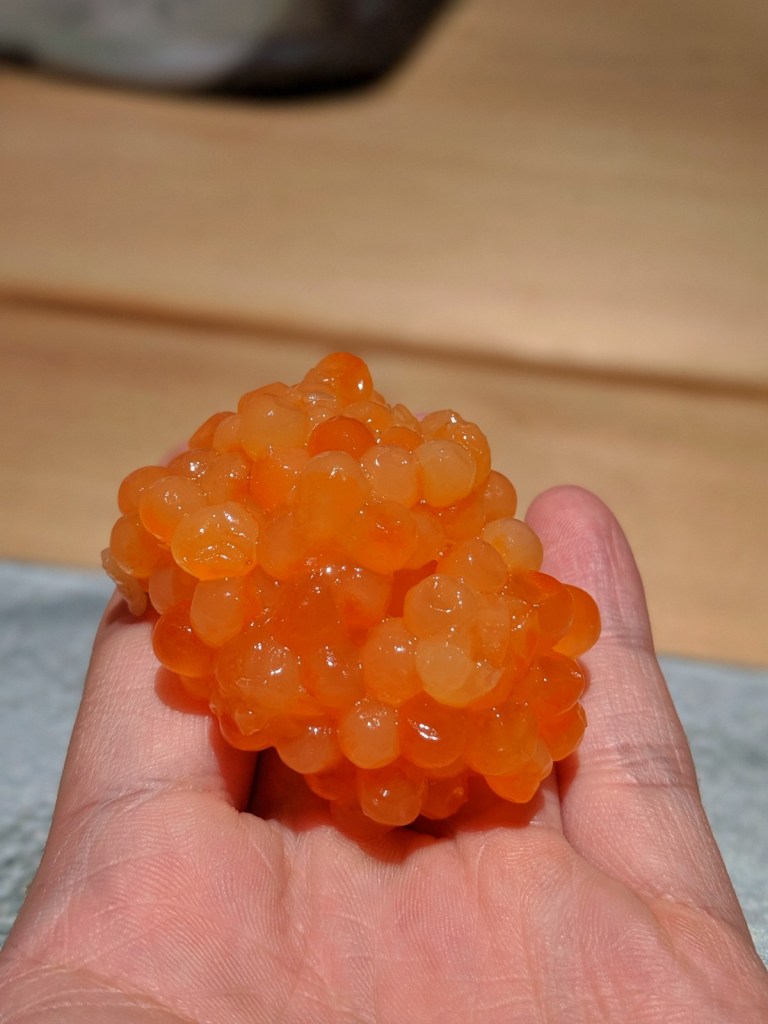
Sujiko is ikura still in its sac. Normally, this is served marinated but generally quite fresh and you get the boba-esque quality of the popping bubbles of salmon roe. Instead, Inomata ages this so that it has a creamy, cheese-like flavour and texture. It had those wonderful layers of funk and it’s the first time I’ve experienced something quite like it — definitely one of the highlight pieces of the evening.
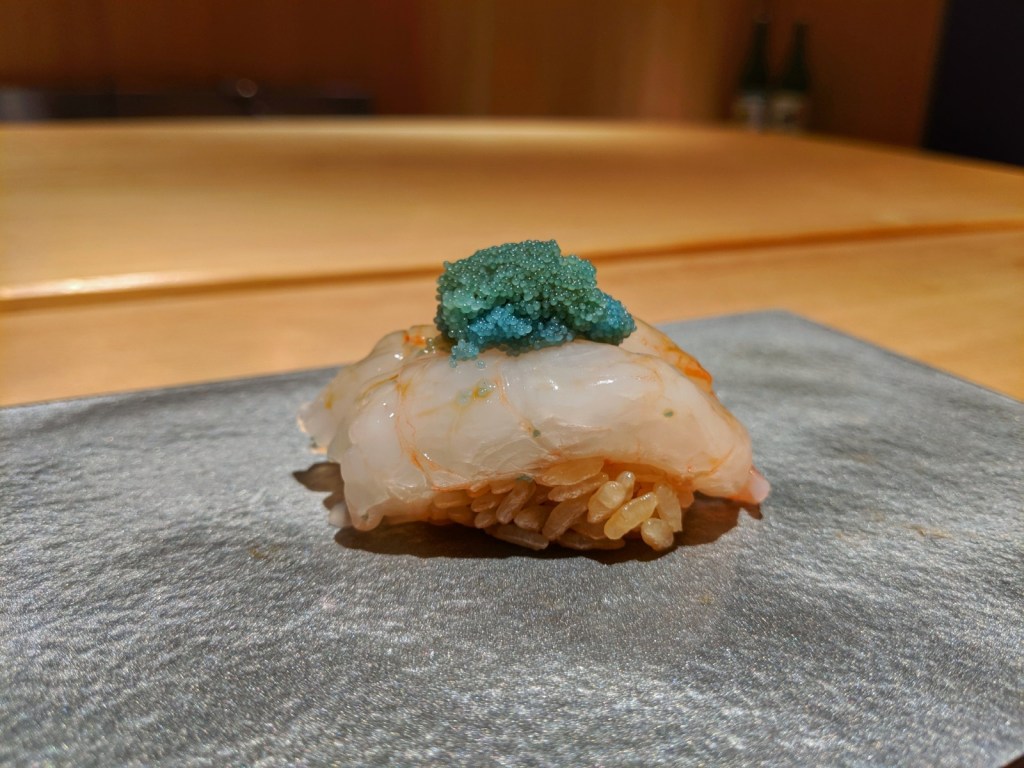
The burst of salt from the strong flavoured roe compliments the natural sweetness of the shrimp, and the juiciness of the meat contrasts with the popping roe to create a uniquely wonderful mouthfeel.
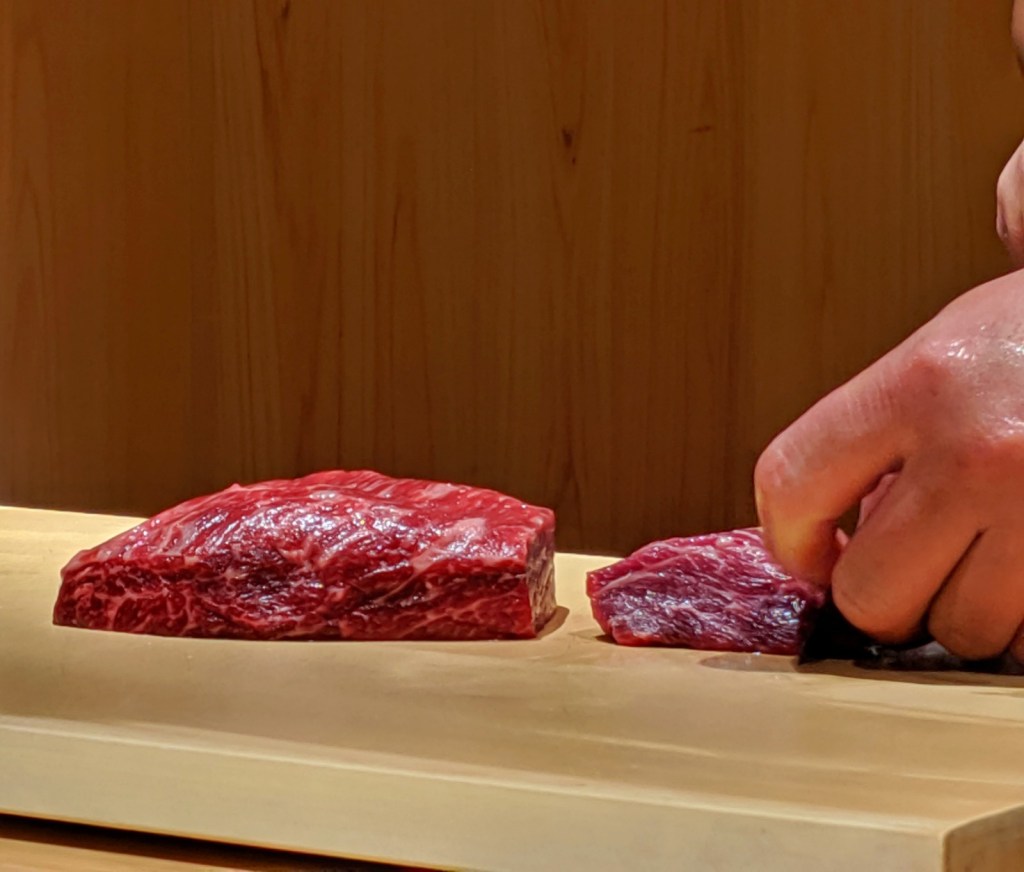
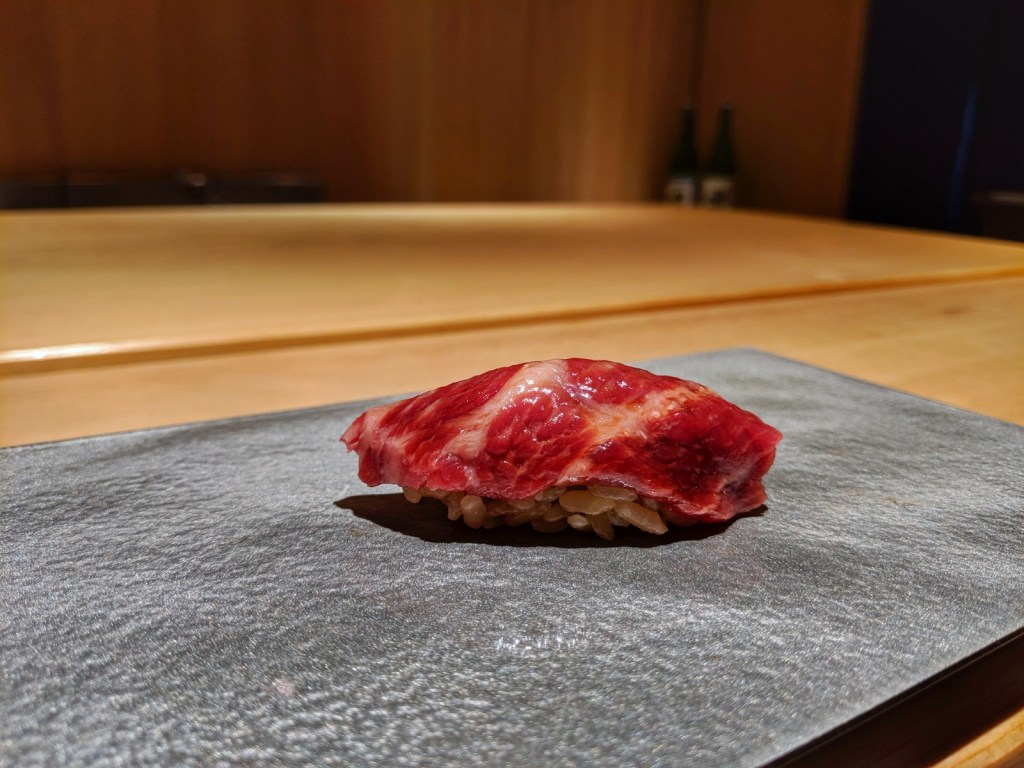
There’s a bit of onion paste on the bottom of the fish kind of like with the previous katsuo piece. It helps cut the minerality and gameyness. There’s a lot of steak-like qualities here in appearance, texture, and flavour. The hint of wildness is balanced really well. I’ve had really bad whale before where all you taste is that wild game note and it’s just very offputting. None of that here!
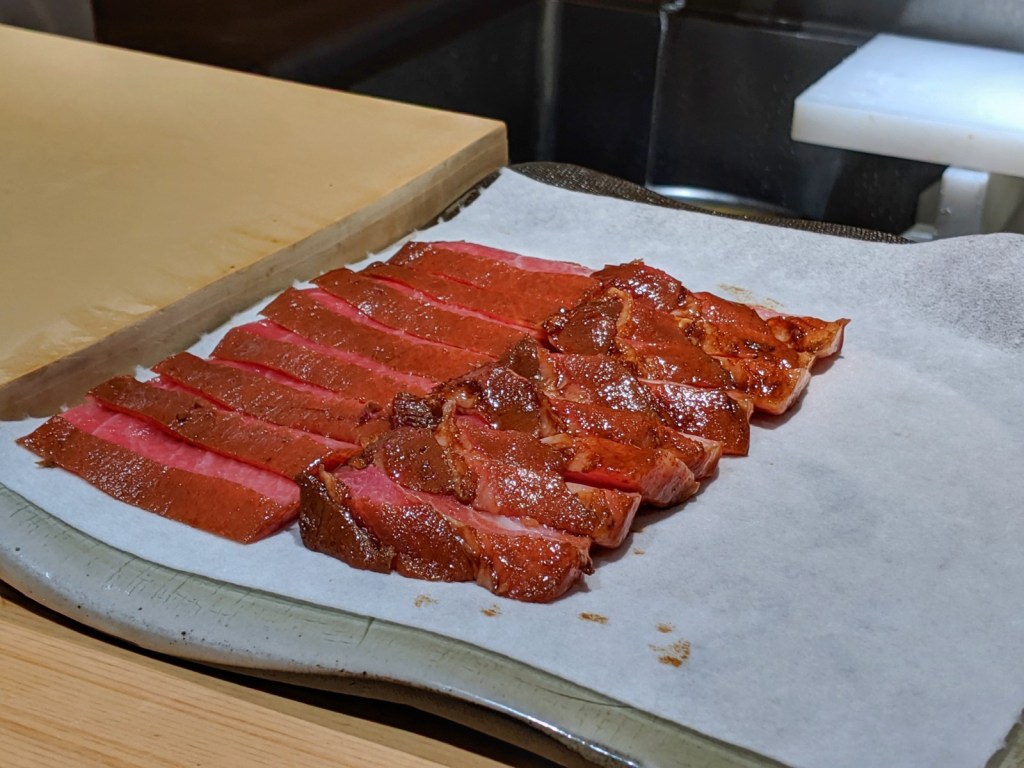
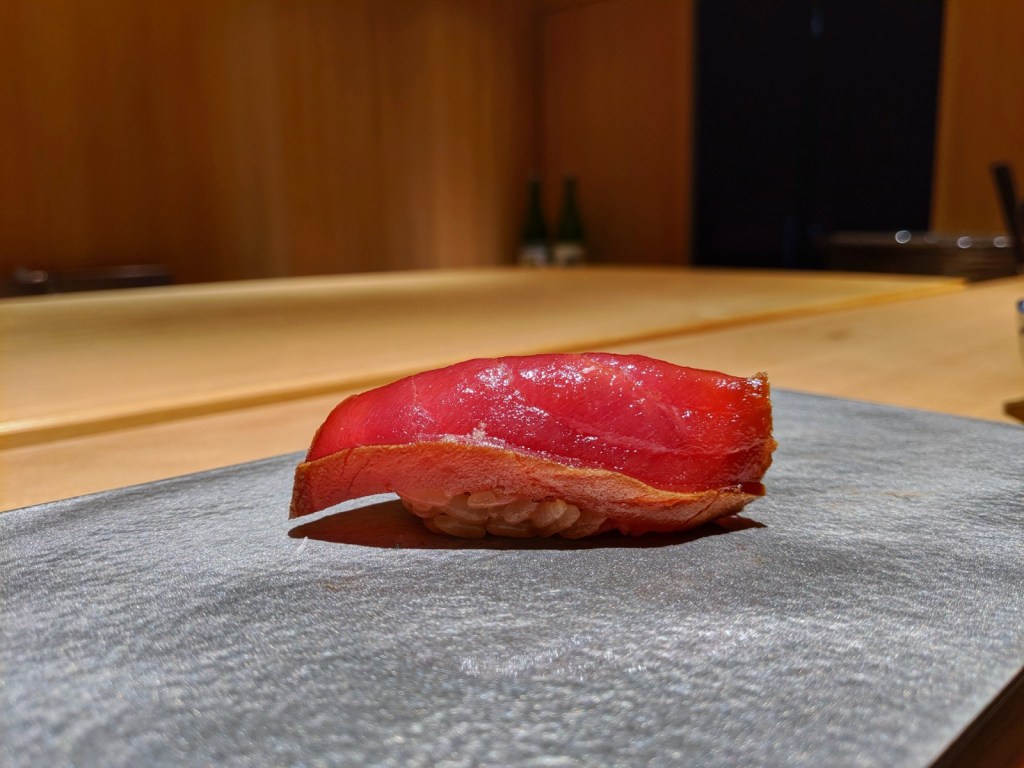
The softness of the flesh releases a nice meaty tuna flavour. Even after it disappears in the mouth, the aftertaste lingers, like a… tasty blanket of tuna? Not sure, but it’s definitely a taste I enjoy.
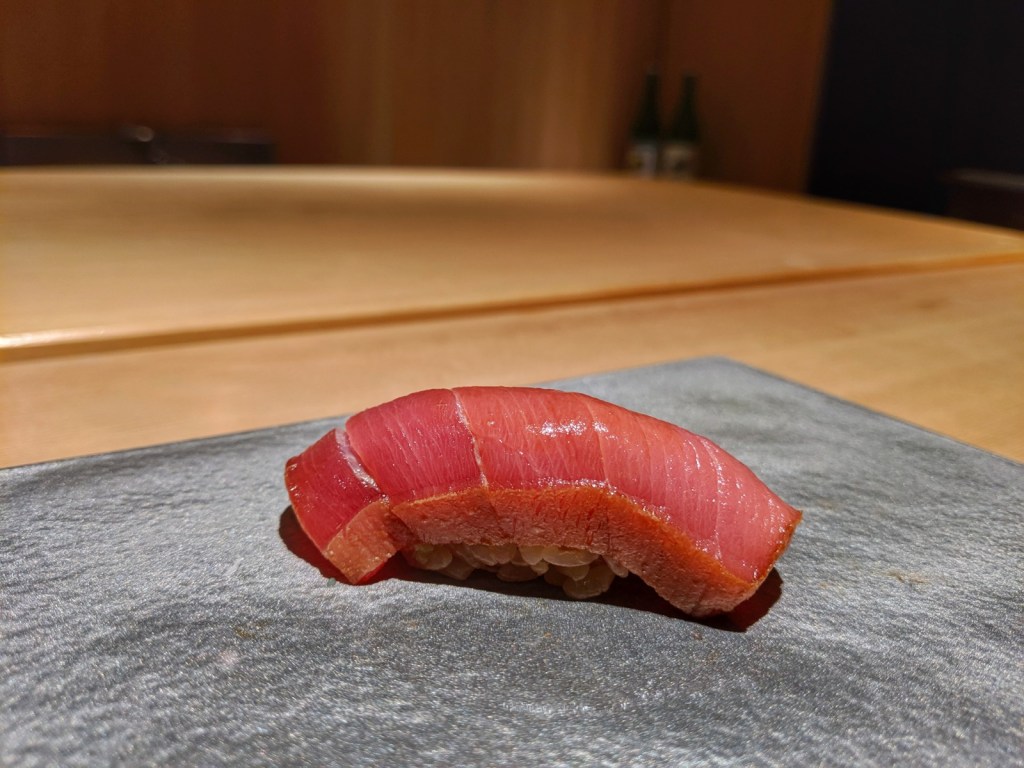
This chutoro is buttery. Usually this is my favourite of the akami-chu-otoro progression as it has just enough of that fatty quality while still having good notes of meaty flavour.
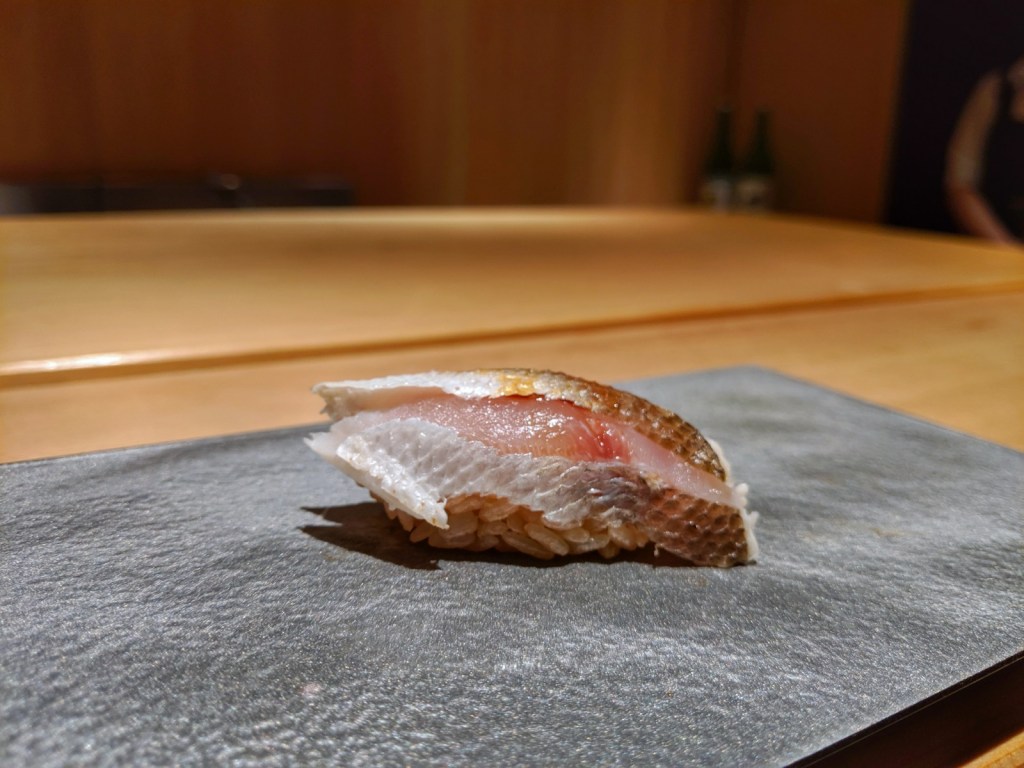
There’s a bit of oboro (shrimp paste) hidden beneath that creates a sudden burst of tamago-esque sweetness that gives way to this clean-tasting fish.
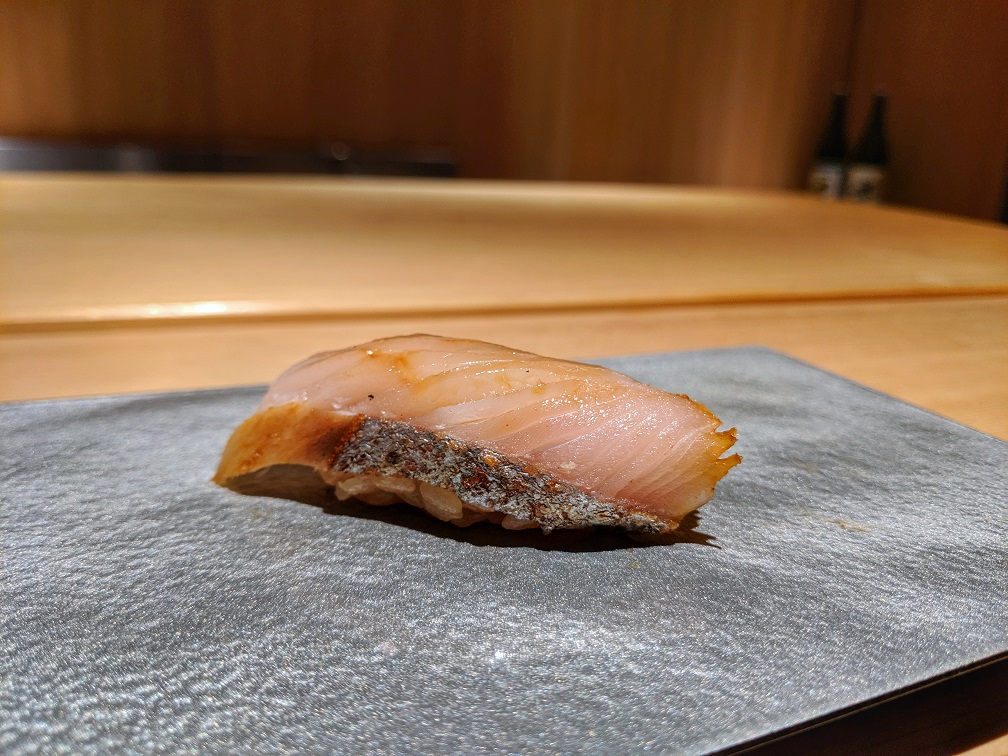
Sawara is often served smoked and that’s also how it’s done here. Unlike the usual though, where the smoke and char are the dominant flavours, at Inomata it’s just an accent to the buttery flesh.
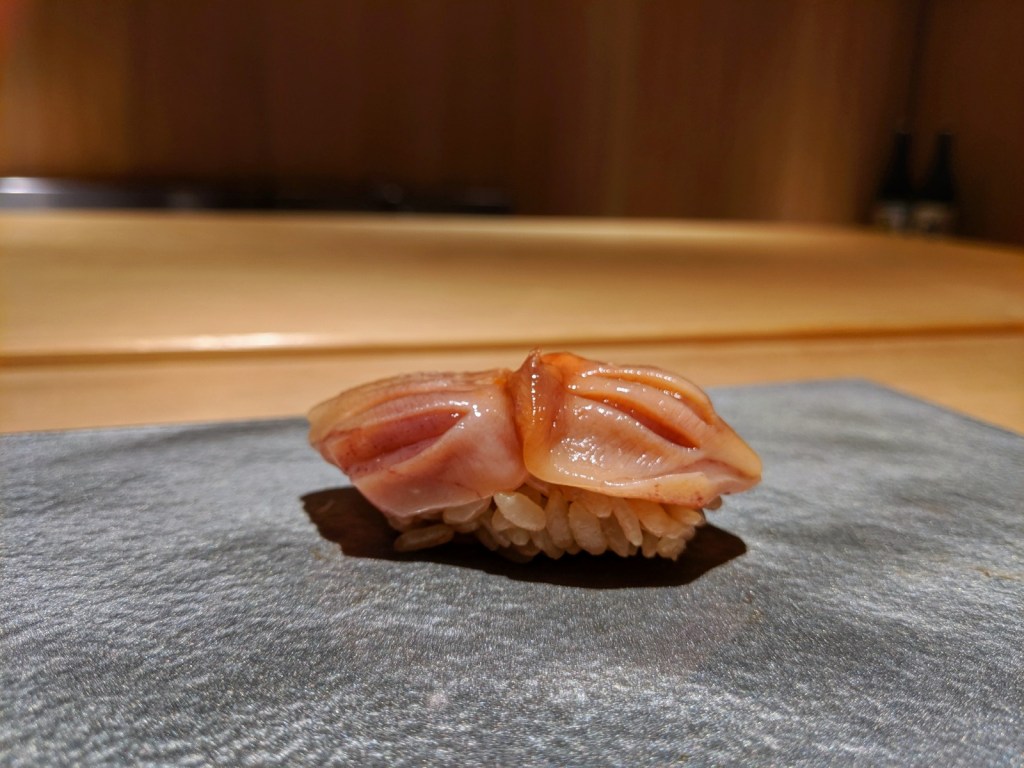
It’s always interesting to see how the shari adds an extra dimension to neta. The acidity of the rice punctuates the pleasant sweetness for a more complete flavour profile. It’s also quite refreshing, since by this point we’ve had a lot of hard hitting fatty pieces. It was a good ‘reset’ button so to speak.
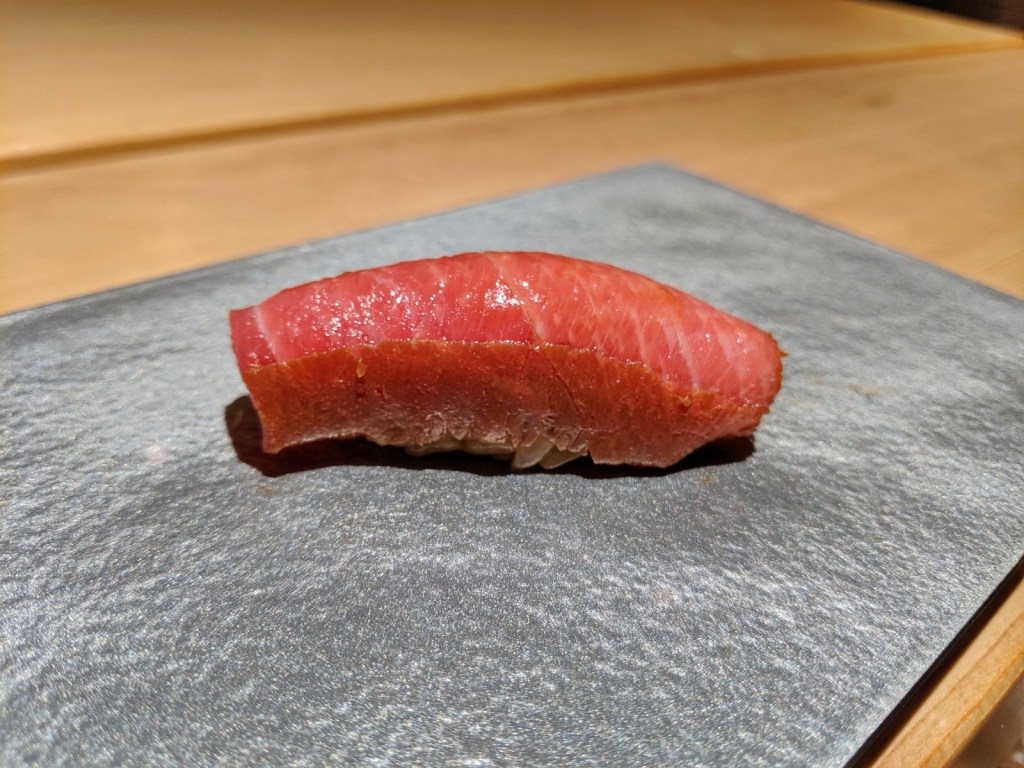
Layered magical fat explosion is how my friend described it.
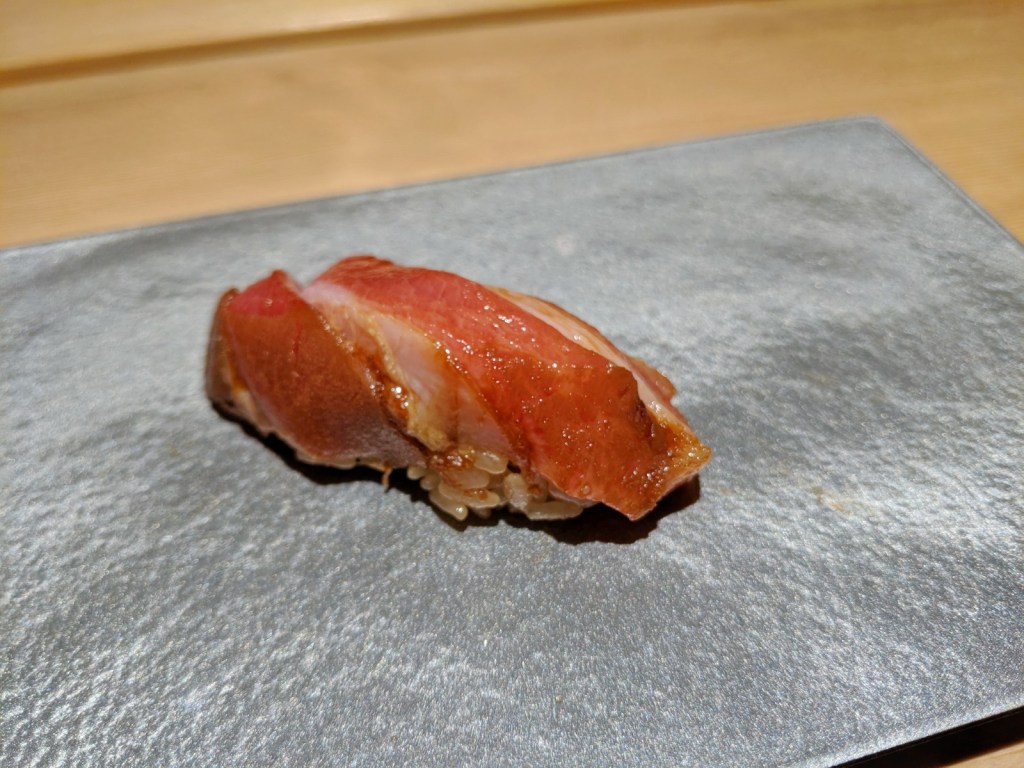
This hits you like a wave with its bold flavour! Sometimes jabara-toro that’s not aged properly tends to be chewy, but here everything disintegrates in my mouth. It’s a wonderful expression of what jabara-toro can be given the proper time to develop.
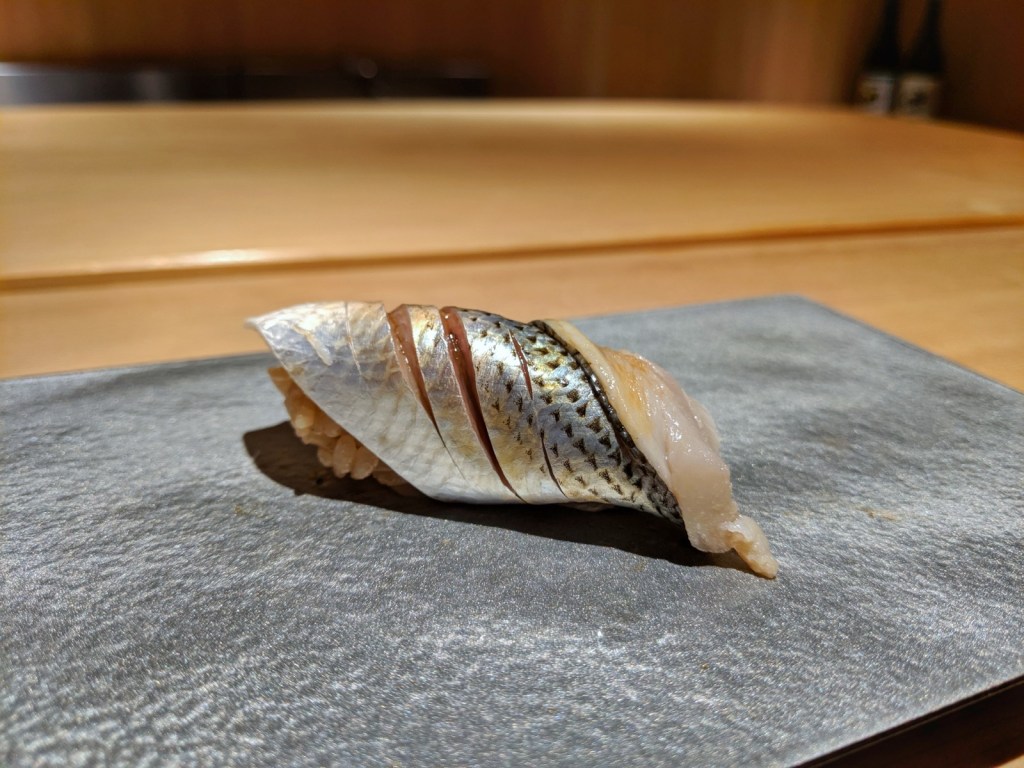
This is one of the biggest, fattiest kohada I’ve ever seen. The oiliness is balanced by the sweetness and acidity, somehow no one element is overpowering yet everything is incredibly strong. This tightrope act of balance and intensity seems to be present in many of Inomata’s pieces, and for me this was definitely the best representation of it in this meal.
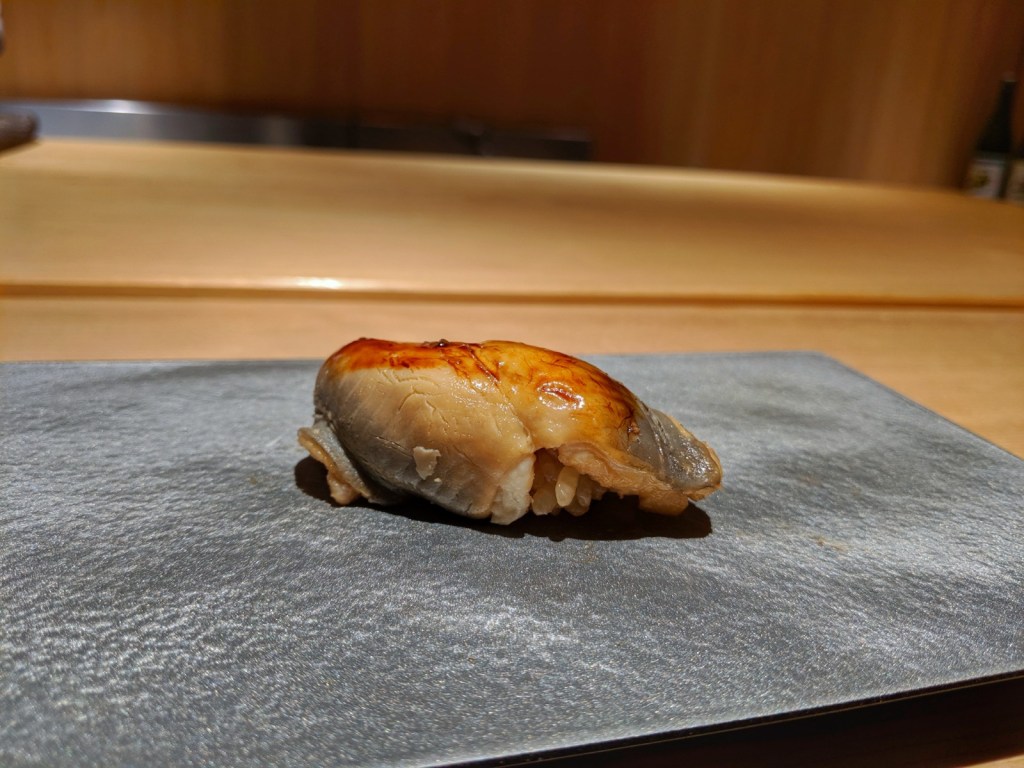
This is what I imagined a cloud would feel like in my mouth as a child. The fluffiness was so intense that I started speaking Japanese to the chef, randomly remembering how to say ‘fluffy’ in Japanese as it bit into the anago. It’s that powerful, folks.
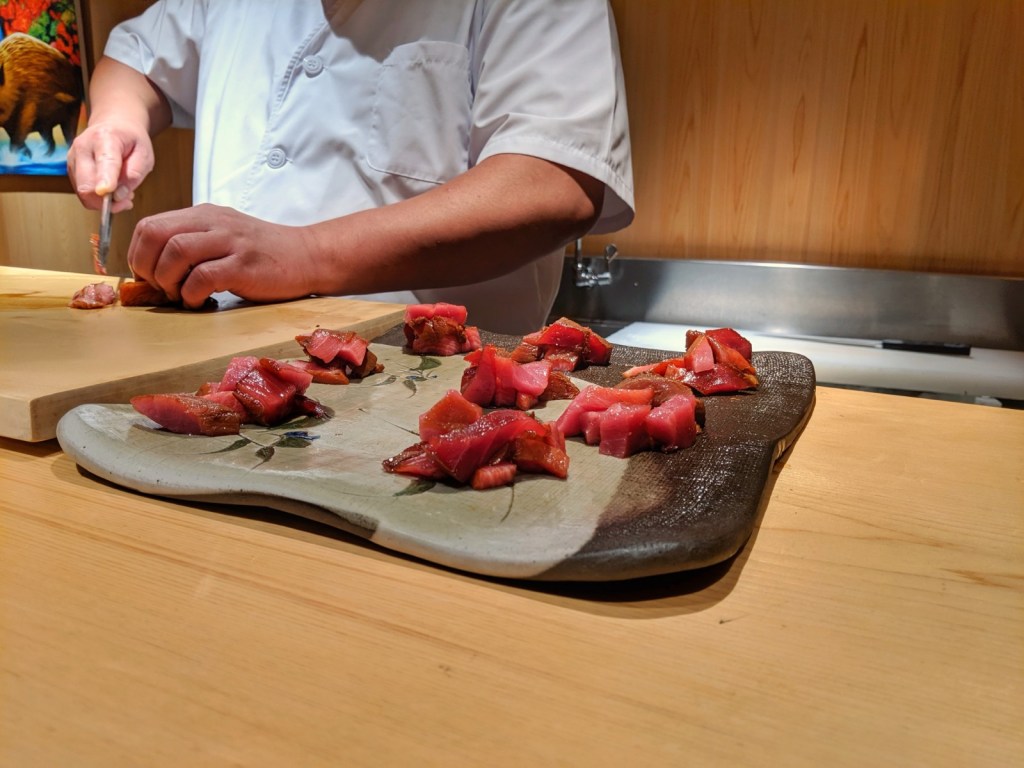
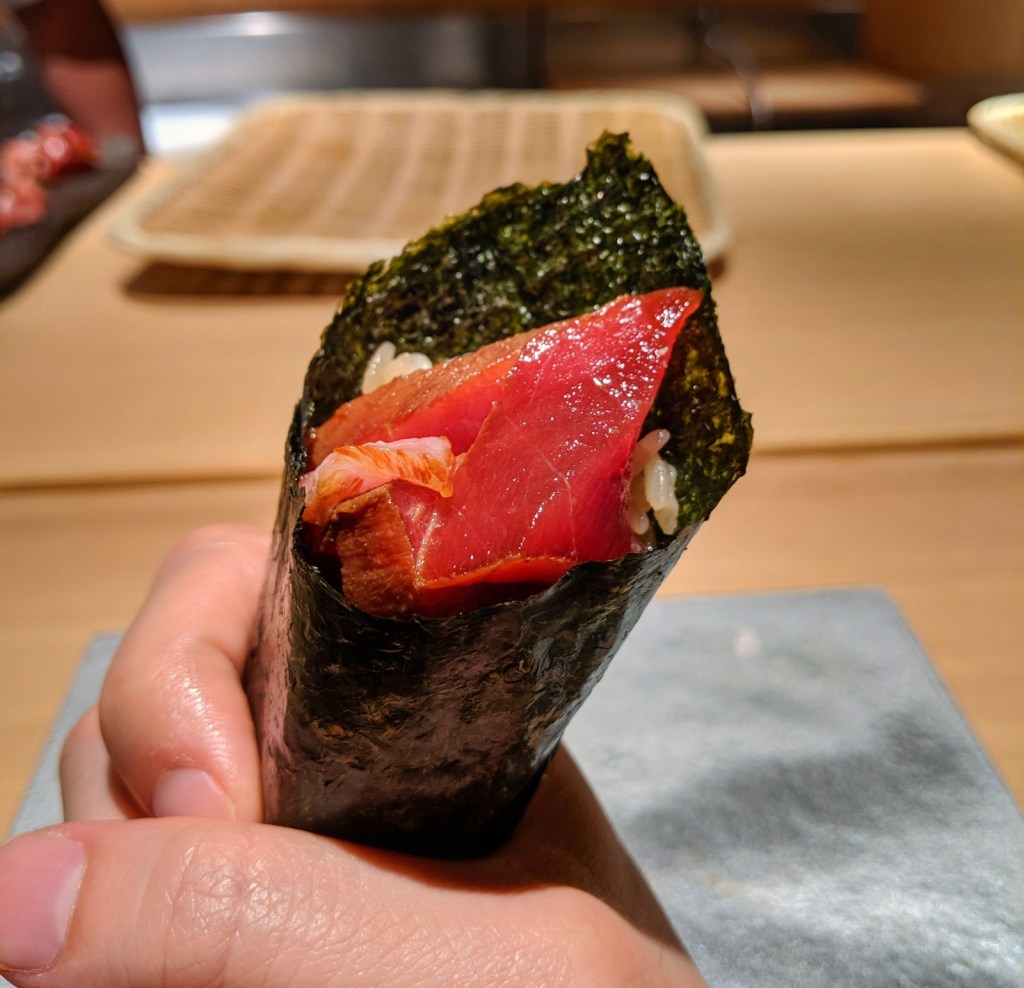
Pardon how weird my hand looks, I got way too excited. There’s lots of impact in this piece and you sort of get the best of all worlds here with the flavours and textures. However, it’s a lot of tuna and I wish I had some onion or something to balance it out a bit.
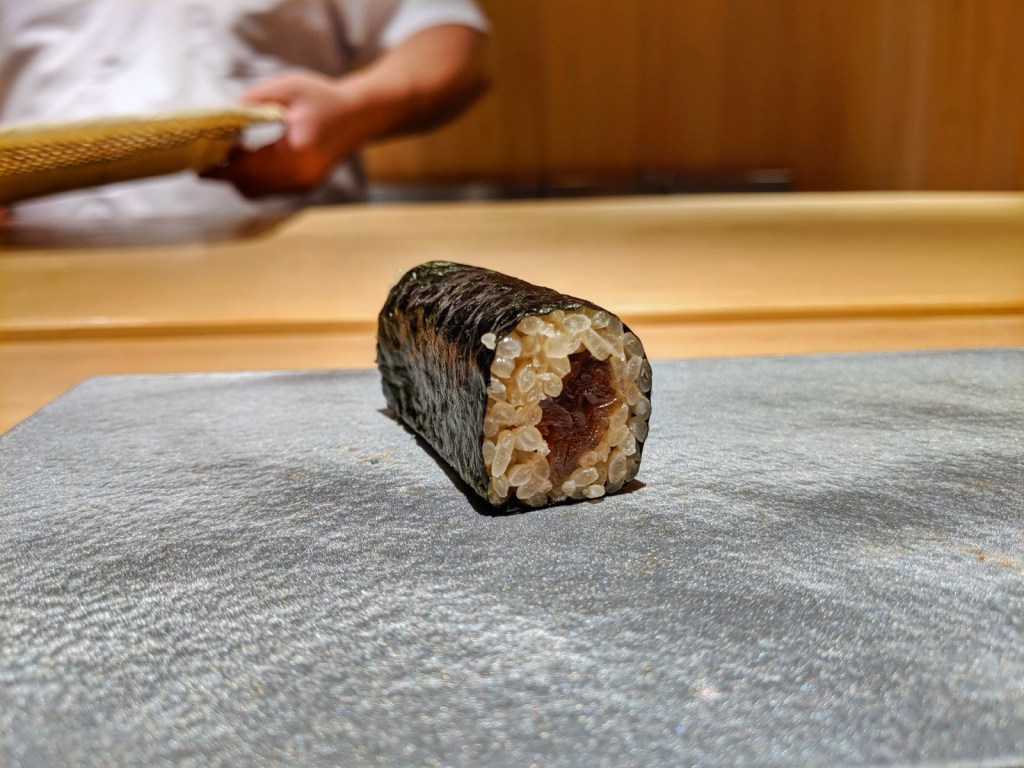
Kampyo is a very classic kind of sushi. It’s sweet and dessert-like with an almost caramel note to it. The acidity of the sushi rice thankfully cuts it to manageable levels.
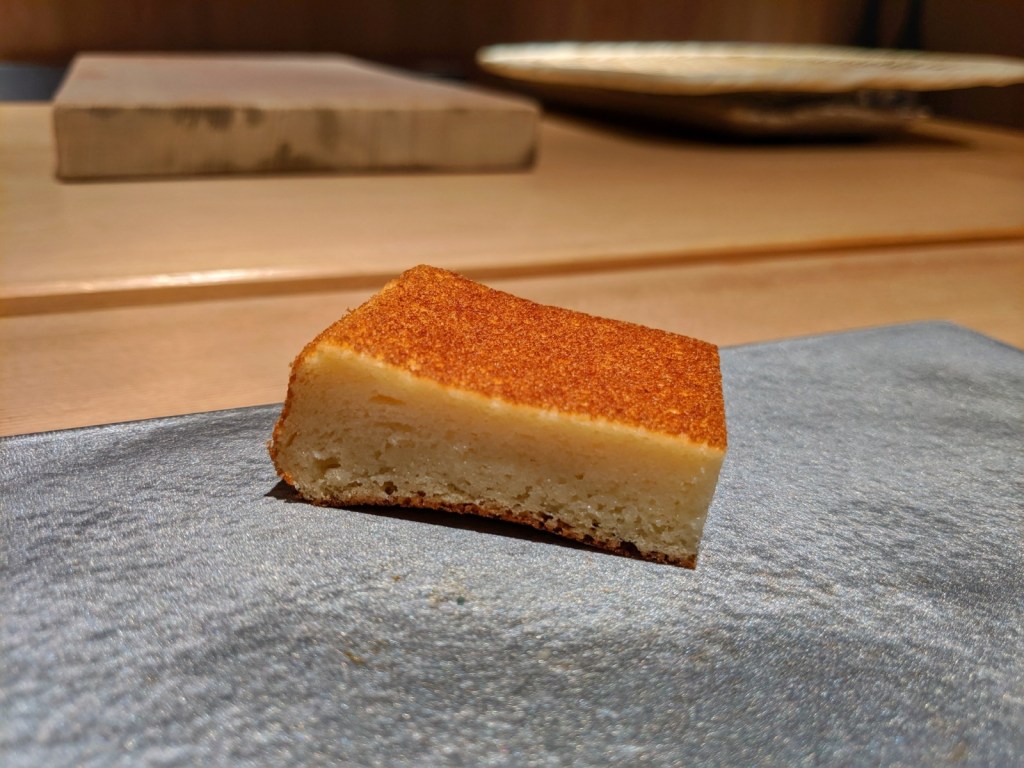
Fluffy cake in egg omelet form. That’s the best way to put it. Egg in Japan is just on a different level, nothing like the premade stuff you find at lots of lower end places in North America.
Price: $360 CAD, but the price went up after I went to around $420 CAD
Rating: 90/100
Website: https://omakase.in/en/r/in410639
Location: Japan, 〒332-0016 Saitama, Kawaguchi, Saiwaicho, 1 Chome−12−23 川口幸町コートハウス
 JeffKCW Food & Travel